Common Forklift Accidents: Guide to Prevention and Workplace Safety

In the context of industrial work, accidents involving forklifts pose a significant challenge to workplace safety. From lifting heavy loads to navigating in confined spaces, forklifts present various risks to operators and the surrounding environment.

Forklift accidents are a key concern for industrial companies worldwide. As these vehicles are widely used to move materials and goods within warehouses and production sites, it is essential to understand and mitigate the risks associated with their use.

Common Forklift Accidents

  • Pedestrian Collisions: One of the most serious incidents involves collisions with pedestrians in the workplace. Lack of visibility and the speed of forklifts can lead to fatal accidents.
  • Falling Objects: During load handling, objects can fall from forklifts, causing injuries to workers or damage to materials.
  • Tip-overs: Especially on uneven terrain or with improperly positioned loads, forklifts can tip over, risking the operator’s life and damaging equipment.
  • Loading and Unloading Incidents: Improper loading and unloading procedures can cause damage to goods and accidents to operators.

Prevention Measures:

  • Training and Education: Ensure that operators are adequately trained in the safe use of forklifts.
  • Regular Maintenance: Conduct regular checks and preventive maintenance to ensure forklifts are in optimal condition.
  • Use of Safety Devices: Install devices such as obstacle detection sensors and audible alarms to enhance workplace safety.
  • Safe Loading and Unloading Procedures: Implement standardized procedures for loading and unloading goods, with particular attention to weight distribution and load stability.
  • Clear Signage: Ensure that areas where forklifts operate are well-marked and that safety instructions for pedestrians are clear.
  • Flexible Protections: A Crucial Element in Forklift Accident Prevention
incidenti con carrello elevatore

Flexible Protections: A Crucial Element in Forklift Accident Prevention

A crucial aspect often overlooked in forklift accident prevention is the importance of flexible protections. These devices, such as flexible safety barriers and bumpers, play a fundamental role in reducing the risk of injuries and damage caused by collisions.

Flexible protections offer an important solution to mitigate the effects of potential collisions between forklifts and people or objects in the workplace.


Compared to rigid barriers, flexible protections absorb and dissipate the impact energy, thus reducing the risk of serious injuries.


Integrating flexible protections into safety plans and standard operating procedures can significantly improve workplace safety and prevent costly and potentially fatal accidents.


Therefore, investing in these solutions represents an important step in ensuring a safe and protected working environment for all operators and workers involved in forklift operations.

Would you like to know more?

Do you have a new construction project or do you need to secure a work area? Would you like to join our network of dealers? Contact the MPM staff.
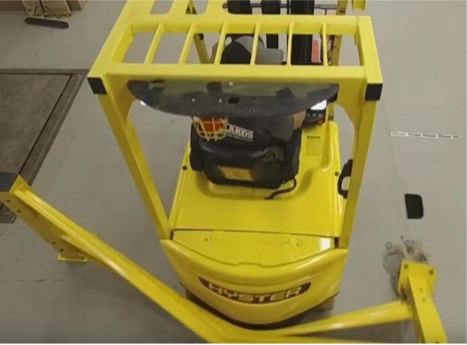
GENIUS: MODULAR DESIGN AND VERSATILITY FOR WORKING AREAS

With GENIUS, adjusting the length of our protections has never been easier. Genius is the innovative and handy answer that guarantees the total modularity and versatility of pedestrian barriers and protections for racks and pillars

Interruptions during the installation are a source of stress and cause slowdowns in the entire logistic and intra-logistic process, GENIUS facilitates the work of the installer who can adjust and adapt the length of the barriers directly on site.

The modular solution is designed not only for installers, but also for the end user. The intuitive operation guarantees, in fact, the maximum versatility of the barriers, within everyone’s reach.

The advantages are also for retailers! Thanks to GENIUS, they can keep a stock of standard-size protections in their warehouse to promptly respond to customer needs by customizing the lengths.

Due to its peculiarities, GENIUS is the most effective and fastest tool for securing areas at risk of collision. A system that responds to the highly dynamic needs of work and logistics environments. Pedestrian barriers and other protective solutions can be moved, reused or shortened to fit perfectly into new contexts and new areas to be protected.

Contact our team for assistance and to find the right Genius model for your MPM product.

THE DIFFERENCE BETWEEN BARRIERS MADE OF MPM TECHNOPOLYMER AND STEEL

The main aim of safety barriers is to protect people, vehicles, machinery and infrastructure.

The resulting costs and benefits depend greatly on the choice of material used for the barrier.

The market currently offers common steel barriers, usually used on roads, and the innovative MPM polymer, which is much more suitable for industrial use. Let’s find out why.

PROTECTION LEVEL AND IMPACT RESISTANCE

Once a metal barrier has been impacted, it deforms and is no longer able to provide perfect protection. Moreover, being a rigid obstacle, it causes serious physical repercussion to the driver of a vehicle involved in an accidental impact.

MPM barriers have a very innovative and unique design, and are made of REFLEX, a very flexible technopolymer that can withstand impact from moving trucks. Their strength has been tested and certified by TÜV SÜD.

This perfect combination makes MPM barriers an ally to increase operator safety awareness, drastically reduce the risk of collisions, and decrease accidents and injuries. This makes the work environment safer and ensures greater efficiency without downtime.   

LONG-TERM RETURN ON INVESTMENT

Steel protective solutions involve high routine maintenance costs. In fact:

  • Moisture causes rusting, making them less visible and therefore hazardous to operators and loads being handled;
  • Impact permanently deforms them, so they must be replaced to ensure continued protection;
  • The material is rigid and transfers the energy to the floor, breaking the concrete, which then needs to be repaired.

MPM REFLEX barriers offer strength and flexibility, and their ability to bend and return to their original shape means they can absorb the energy from repeated impacts. This means that the energy is dissipated rather than being transferred to the ground or impacting body, so:

  • the floor is preserved undamaged;
  • vehicles are undamaged;
  • no replacement or repair costs after impact;
  • the protection remains highly visible and coloured, with no need for repainting.

Workplace Injuries

The first thing to understand is what workplace injuries are according to the Ministry of Labour and Social Policies in Italy. The definition is: “workplace injury refers to any injury that originates during work.”


For this article on workplace safety, we will take Italy as a case study.


According to INAIL (National Institute for Insurance against Workplace Injuries), in 2018 the following injuries occurred most frequently:

  • 53.3%: fractures
  • 15.8%: dislocations and sprains
  • 13%: bruises.

Statistically speaking, there are a variety of causes that can lead to workplace injuries and lesions. According to industry associations, slips, trips, and falls represent the primary cause of occupational injury, accounting for 34.7%. Often there is not even a specific tripping hazard as evidenced by DGUV statistics on workplace injuries in 2016.


Other causes of workplace injuries include:

  • Malfunctioning of tools, machinery, objects, and procedures;
  • Incorrect lifting, transport, and storage operations;
  • Non-compliance with safety standards;
  • Lack of experience;
  • Lack of awareness of safety and risks.

ITALY STATISTICS 2021

incidenti sul lavoro
Fonte: https://www.loxam.it/it-it/osservatorio-sicurezza/pericoli-ed-incidenti-nei-lavori-in-quota

Falls from heights most often result in injuries caused by fractures, with over 77% of injured individuals presenting fractures. Compounding this statistic is the fact that in 50% of cases, the injury is a skull lesion. In other types of incidents, the most frequent injury is crushing, with 56.4% of cases, while in about 37% of events, the trauma is related to multiple locations. 


Among workers, there is often the belief that experience alone is sufficient to avoid most accidents, but unfortunately, this is not the case. Workers with more than 3 years of experience in their role represent 77.3% of those who fell from heights, slightly higher than for other types of incidents (74.5%).


This proves that experience alone is not an effective means to combat injuries; specific training, tools, equipment, and PPE (personal protective equipment) are required as mandated by law.

FORKLIFTS

ReportsnReports stated that approximately 1,334 million forklifts were sold globally in 2017, with a year-over-year increase of 15.7%. Forklifts have become one of the important elements of workplace safety due to the injuries they cause.

In 2022, Italy recorded 2,238 forklift-related incidents, including 15 fatal cases. These numbers highlight the importance of safety in workplaces, particularly in industrial areas. An increasingly effective tool for preventing such incidents is the use of Automated Guided Vehicles (AGVs).

CONSEQUENCES

When the necessary precautions are not taken or implemented, the number of incidents can increase daily, potentially resulting in death. The most common causes of forklift accidents in Italy can be divided into five main categories:

  • Vehicle Overturning: The overturning of a forklift can occur during maneuvers that are too fast or on uneven terrain. This type of accident is particularly dangerous as it can cause serious injury or even death to the operator.
  • Falling Load: Incidents due to falling loads can occur when materials are not properly secured or when attempting to move an excessive load. This can lead to damage to goods and potential injuries to surrounding workers.
  • Collision with Loads or Moving Machines: This type of incident occurs when a forklift collides with other objects, loads, or machinery within the work area. It is often caused by human errors such as lack of attention or ineffective communication between team members.
  • Workers Trapped Between Loads or Moving Machines: In some cases, workers can become trapped between heavy loads or moving machinery. These incidents can cause severe injuries and are often the result of inadequate safety procedures or lack of training.
  • Vehicles Crashing into People: Incidents where a forklift strikes a person are among the most serious and can have fatal consequences. These accidents can be caused by reduced visibility, operator misjudgment, or lack of awareness by pedestrians.

INAIL DATA

INAIL records 245 events out of approximately 5,500 cases recorded between 2002 and 2020. The majority of injured workers have more than 3 years of experience in their role, accounting for over 63% of the total. 57% of the injured had a permanent job, and just under 10% were partners (including in cooperatives).

CONCLUSIONS

It is evident that work experience, while important, is not sufficient to prevent all workplace injuries. Continuous training is necessary, along with the use of adequate equipment and personal protective devices. Among the most effective solutions for reducing the number of incidents are flexible safety barriers. These barriers can be essential in creating a safer work environment, protecting workers from the risks of impacts, falls, and collisions, thus contributing to a significant reduction in workplace injuries.