8 October 2026 |  News
News
What barriers do I choose?
Industrial protections
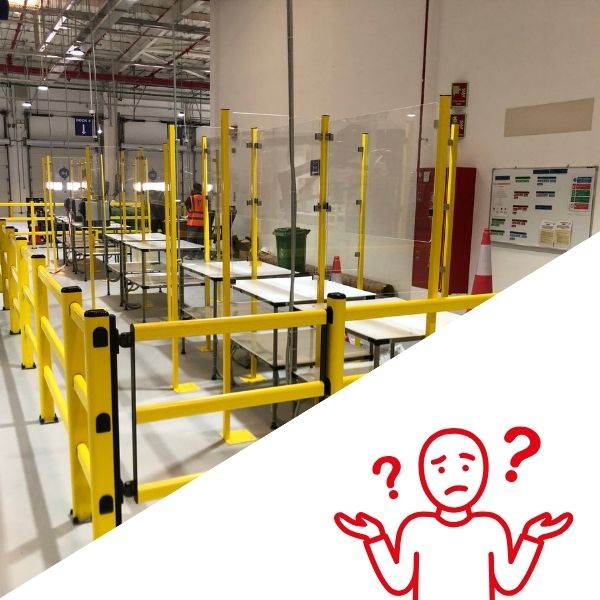
Safety barriers are one of the most common tools used to reduce these risks. But choosing the right barrier is not simply a matter of picking a product and installing it where it looks useful. The right solution depends on what you need to protect, how your facility operates and the specific risks present in each area.
In this guide, we’ll look at what safety barriers are, why they are used, the most common applications and the factors to consider when choosing the right solution for your warehouse or industrial facility.
WHAT IS A SAFETY BARRIER?
To give a truly “textbook” answer to this question: a barrier is anything that prevents, limits, or controls access to a hazard.
The most commonly thought-about and popular are physical barriers, like the ones produced by MPM, whose job is to prevent accidents, protect structures, people and goods, and control access and movement by, literally, being physically present. In an industrial setting, where safety is a must and there is a truly staggering amount of movement of machines and goods, physical safety barriers are always a good investment, since they can minimize risks and absorb damage instead of what they are there to protect.
What are barriers for?
Barriers can truly have an infinite number of materials, forms, configurations, design philosophies and characteristics. Some can be made of wood, others of metal, and the most modern ones, like the ones MPM produces and exports all over the world, can be made with flexible polymers.
If you’re looking to purchase some type of barrier, the choice can seem daunting.
So here’s our suggestion: it’s easier to first identify the risk you aim to minimize and then look at what type of barrier best suits your needs.
Let’s first analyse the most common situations in which a barrier can (and should) be used:
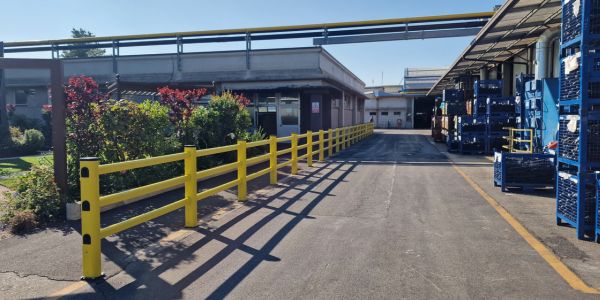
- I want to reduce accidents: In industrial and warehouse environments, the interaction between forklifts, pallet trucks and pedestrians can create significant safety risks. Corners with low visibility, complex crossings, areas where both pedestrians and vehicles are present at the same time, just to name a few, are truly hotspots for potential accidents. Properly positioned safety barriers help organise these areas by separating vehicle and pedestrian routes, creating a clearer and safer flow of movement and helping prevent accidental collisions. Barriers can also be used to mark evacuation routes, prevent falls, and highlight important landmarks, such as doors and low passages.
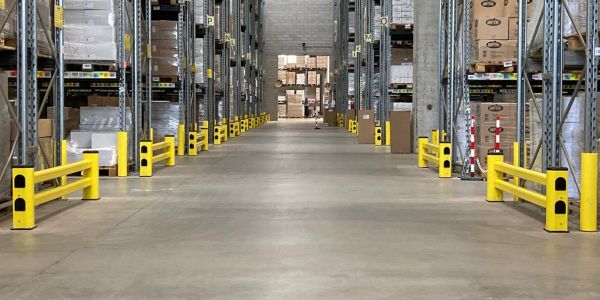
- I want to protect my assets: Industrial facilities contain valuable infrastructure, machinery and stored goods that can be vulnerable to accidental impacts from forklifts and other material handling equipment. Safety barriers help absorb and deflect impact forces, protecting racks, machines and products while reducing the risk of costly damage and operational disruptions. Even better if protections are bright and easily visible, like MPM’s, because they can be seen from afar and give drivers and forklift users a visual cue to correct their behaviour before impact.
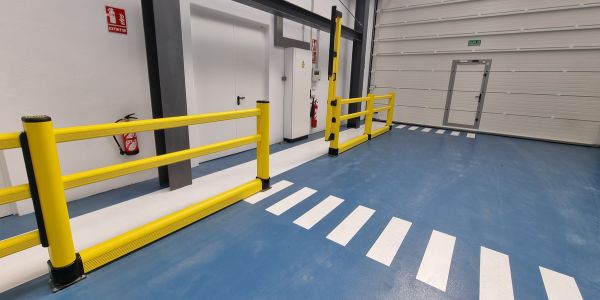
- I want to improve viability: In a busy warehouse, every movement matters. Obstructed views and poorly defined routes can increase the risk of collisions between vehicles, equipment and pedestrians. Strategically placed safety barriers help create clear boundaries and guide traffic, making the warehouse easier to navigate and reducing the chances of accidents. By improving visibility and clearly separating different areas, barriers help operators and pedestrians better understand their surroundings and anticipate each other’s movements.
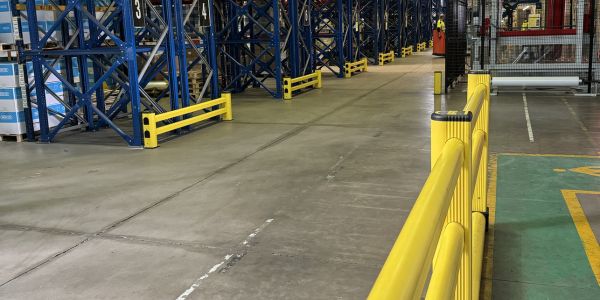
- I want to avoid fines and legal consequences: Failing to address safety risks in an industrial environment can have significant consequences. Safety regulations and standards are becoming increasingly demanding, and companies are expected to take appropriate measures to identify and reduce potential hazards. Installing safety barriers can be an effective way to reduce the risk of accidents, protect people and assets, and demonstrate that appropriate preventive measures have been put in place.
How do i choose barriers?
As we’ve seen, there are many reasons why a company may choose to install barriers. Once the specific risk has been identified, it is time to decide what exactly needs to be done, based on the way the warehouse operates.
A great number of factors go into defining the right barrier for your needs, including:
The area to be protected: racks, machinery, doors, pedestrian areas, corners, loading areas, etc.
The type and level of impact expected: from light contact to repeated impacts from forklifts or other vehicles.
The vehicles and equipment in use: forklifts, pallet trucks, AGVs, trolleys and other material handling equipment.
The available space: including the distance between traffic routes, machinery, racks and other obstacles.
Visibility and traffic flow: how easily operators and pedestrians can see and anticipate each other’s movements.
The environment: indoor or outdoor use, temperature, humidity, exposure to chemicals, UV radiation and other conditions.
The type of protection required: whether the priority is protecting people, structures, machinery, goods, or controlling access and movement.
The way the warehouse operates: the frequency of vehicle movements, pedestrian traffic and the specific activities carried out in the area.
Installation and maintenance requirements: how easily the barrier can be installed, inspected, replaced or adapted as the facility changes.
MPM will help you
Sounds complicated, doesn’t it?
Don’t worry, MPM is here to help.
Every warehouse and industrial facility is different, which is why we don’t believe in one-size-fits-all solutions. Our usual approach is to take the time to understand your requirements in detail and study the aspects that make your facility unique: how people and vehicles move, what needs to be protected, where the risks are and how your operations actually work.
We also arrange on-site visits at no cost, so our team can see the environment firsthand and better understand what is really needed.
Once we have a clear picture of the situation, we develop a solution around your specific requirements. Our offer is tailored to what your warehouse or facility actually needs, rather than simply adding products that may not be necessary.
And once the project is approved, we take care of the rest: from the final solution and configuration to the details needed to make your workplace safer and more functional.
Our goal is simple: to provide the protection you actually need, based on the way your facility works.