11 June 2026 |  News
News
Metal barriers or Polymer Barriers?
Industrial protections
If you’re reading this article, chances are you’re looking for the best way to improve safety in your facility. Whether you’re designing a new warehouse, upgrading an existing production area, or simply looking to better protect your people, equipment and infrastructure, choosing the right safety barrier is an important decision.
With so many solutions available on the market, understanding the differences between materials, technologies and applications can be challenging. The purpose of this guide is to help you navigate the available options, understand the advantages of each solution, and identify the protection system that best fits your facility.
METAL BARRIERS
Metal barriers are still the most common type of industrial protection around the world.
Steel has been the “default” material for industrial safety for decades and has become synonymous with the industry. As it is the material most architects and safety engineers are familiar with, steel is often the first choice.
Some people may be more susceptible to this kind of “historical inertia” and stick to what they know and already trust, and thus keep choosing metal over other types of solutions that might be more suited to a particular application.
That said, there are legitimate reasons one should use steel barriers in certain occasions:
- Durability: Metal or steel barriers can technically withstand higher impact forces, given their rigid structure. But even thought they can stop greater loads, this does not happen without significant collateral damages on the barrier itself and the surrounding floor. This resistance makes them ideal for stopping a single major impact, instead of stopping several smaller impacts like it usually happens in industrial settings. This is why they are commonly used in roadside applications and heavy-duty industries.
- Resistance to outdoor agents: High-quality steel barriers can withstand UV radiations, temperature extremes and decades of weather exposure without without significant deterioration or a major loss of performance. The most prominent weakness they have is that they are prone to rusting, in case the protective layer of zinc commonly used in galvanized steel is eroded or damaged, and over long times they need to be regularly checked to ensure their structural integrity.
- Affordable cost: The initial cost of metal barriers is usually lower when compared to other types of solutions, like flexible ones. But this comes with a caveat: metal barriers are extremely prone to irreversible deformation upon impact. Each time they are struck, their rigidity makes permanent deformation highly likely and conseguently will need immediate subtitution. Given how often barriers are hit in an industrial setting, this can cause maintenance costs to balloon and ultimately result in a much higher overall investment.
FLEXIBLE BARRIERS
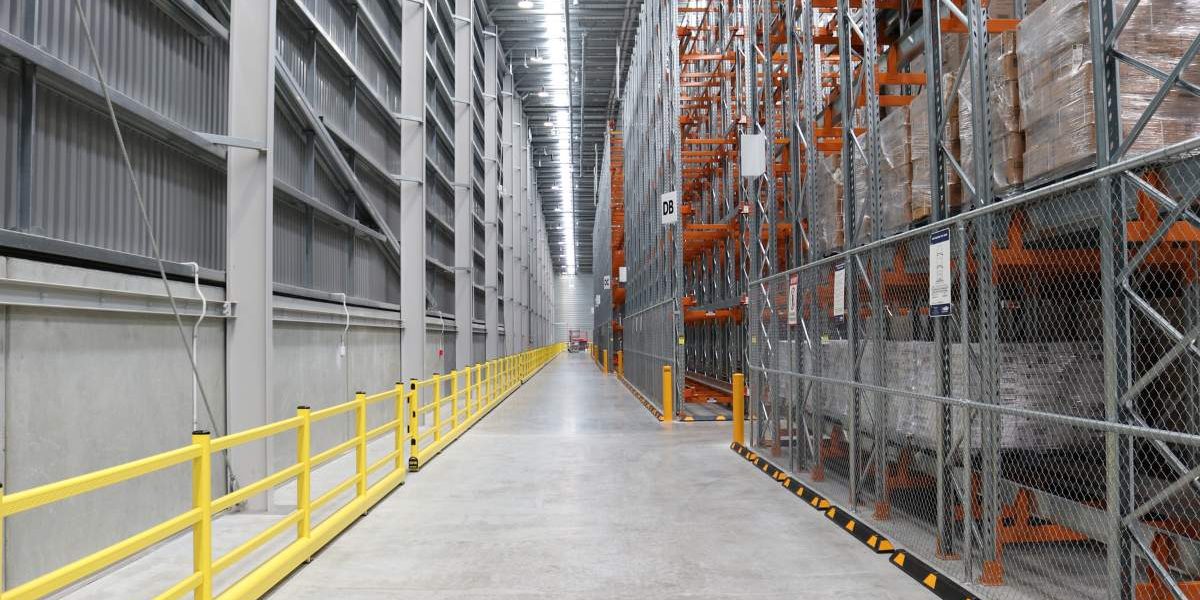
In the great scheme of things, Flexible barriers, whether PVC-based like MPM’s or made from other polymer materials, are relatively new to the market. They have seen the light of day only recently, but have quickly become a standard feature in all modern warehouses.
They present a wide range of distinct advantages over traditional steel protections, making them a smart long-term investment:
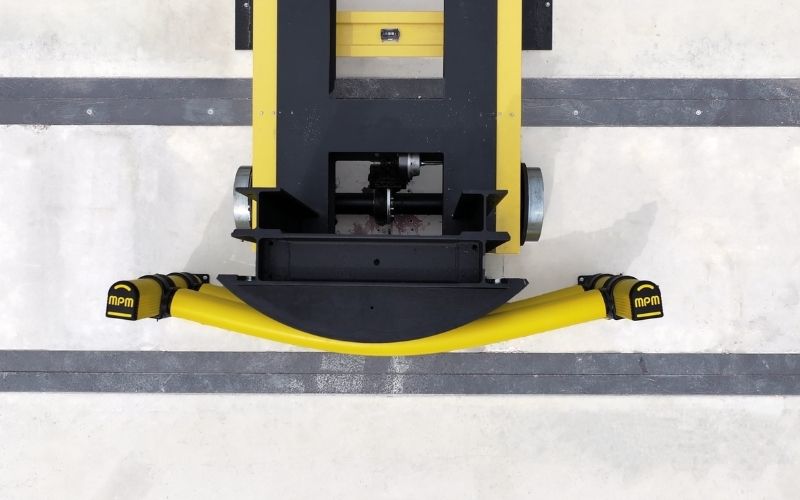
- Impact Absorption: the main and most distinctive quality about these barriers is their flexibility. They are capable of absorbing multiple impacts without the need for replacement thanks to their elastic response to damage. This makes them the perfect solution for all industrial settings with great vehicular traffic.
- Protects Floor Fixings: when a forklift hits a traditional steel barrier, most of the impact energy is transferred directly to the floor anchors, tearing up the concrete. Flexible barriers dissipate kinetic energy within the polymer profile itself, minimizing mechanical stress on the anchor bolts and preserving floor integrity.
- Significant Long-Term Savings: the initial investment for flexible protections is higher compared to steel, but the Total Cost of Ownership is significantly lower. How come? Polymer barriers don’t rust, don’t require repainting and most of all don’t need to be replaced after each single impact, since their elastic structure can absorb the hit and then return to their original shape without any changes to their capabilities. This makes maintenance and repair costs incredibly manageable.
- Operator safeguard: the flexible nature of the barriers makes them capable of absorbing the impact in a controlled manner, cushioning the impact and thus preserving the safety of both the vehicle and the driver. With traditional metal barriers the energy in entirely transferred to the forklift and driver risking structural damage to the vehicles, operator injuries and displaced loads.
WHY MPM?
MPM, after years of working in the field of plastics, chose to venture into the flexible barriers market and in just a few years thanks to their innovative approach to product desing and innovative mentality they became one of the top players in the market.
What’s the difference between MPM Barriers and Others?
- Different materials: While most flexible barriers available on the market are manufactured from polyethylene (PE), MPM took a different approach by developing its products using a specially engineered PVC-based polymer.This choice was driven by the goal of achieving a better balance between flexibility, strength and long-term durability. The material has been specifically designed to absorb impacts efficiently while maintaining its structural integrity over time, allowing the barriers to return to their original shape after repeated collisions.
- Save-spacing design: whereas most flexible barriers are on the market tend to be wider, but MPM chose another path. Thank to our choice of materials we have designed our protections to be more compact without compromising on their ability to absorb impacts effectively. This makes their operational footprint far smaller and helps you save invaluable space in your aisles and passages.
- UV exposure: One of the biggest weaknesses of many polymer barriers is their resistance to prolonged UV exposure. These types of barriers are often susceptible to discoloration after extended periods of direct sunlight. MPM has overcome this limitation with REFLEX Alpha, our innovative PVC-based polymer specifically developed to withstand extreme environmental conditions. Thanks to its advanced formulation, REFLEX Alpha offers outstanding UV resistance, maintaining both its appearance and mechanical properties even after long-term outdoor exposure.
- V0 rating according to UL94: Another common concern with flexible polymer barriers is their behaviour in the event of a fire. Once again, MPM’s choice of material makes the difference. Our REFLEX polymer has achieved a UL94 V-0 fire classification, the highest rating within the vertical burn test. This means the material is self-extinguishing, does not promote flame propagation, and produces no flaming drips, providing an additional level of safety in industrial environments.
IN CONCLUSION
Metal barriers are ideal for roadside use and for really heavy-duty industries, where it is more important to stop a single really heavy impact.
Flexible protections give the best performance in warehouses and plants with heavy forklift traffic and other similar vehicles. In these settings, there is a need for continuous protection against frequent relatively light impacts, and this is where polymer barriers shine.